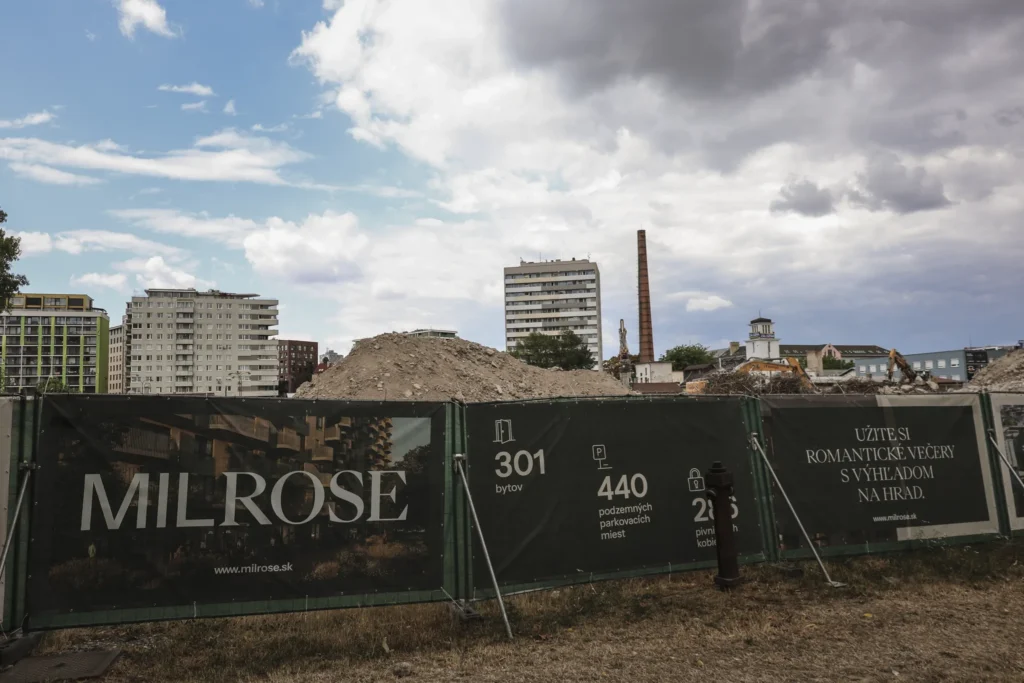
Demolition isn’t just about tearing things down. What’s happening at the former Kovoprojekt site?
Disappearing walls, the sound of machinery, and piles of construction materials. At first glance, the redevelopment of the former Kovoprojekt site, which began in June 2026, might seem like an ordinary demolition. However, it is a carefully planned process aimed at preserving as many construction materials as possible for reuse and recycling.
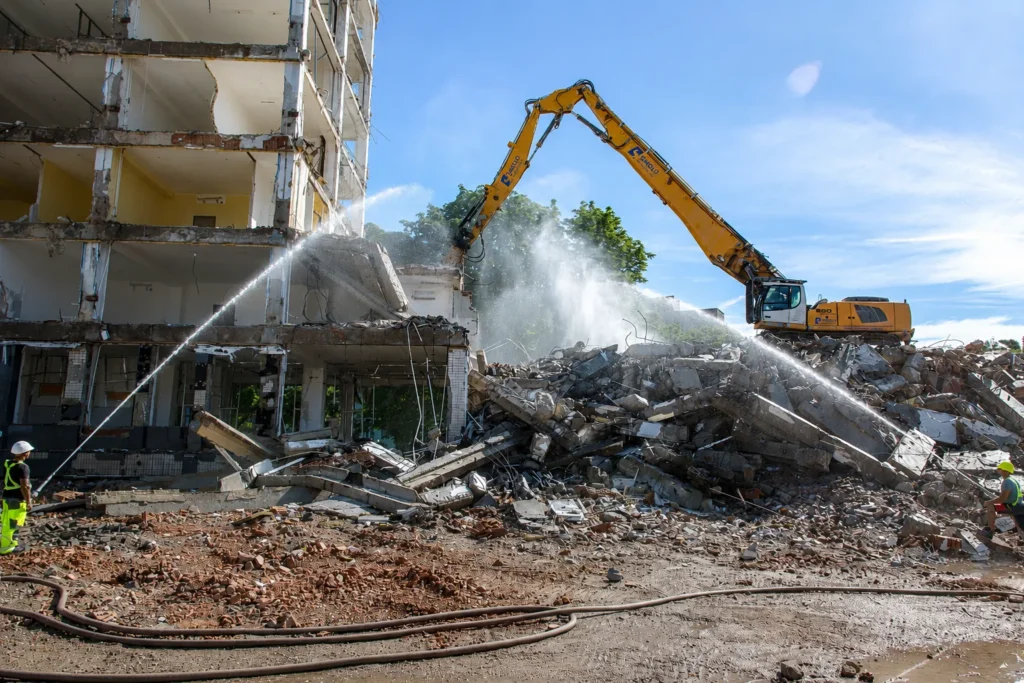
This is precisely what distinguishes selective demolition from conventional demolition. The building is not removed all at once, but is gradually dismantled, and the materials are sorted according to their potential for further use. The project goal is to reuse almost all the materials.
Every material has its own path
Before heavy equipment arrived on site, the building was thoroughly prepared. Before the demolition began, the asbestos-cement structures were removed under the supervision of a qualified company. This was followed by the gradual clearing of the building and the sorting of wood, plastics, glass, technical equipment, and thermal insulation.
All window panes were also removed by hand, so the glass and plastic frames could be recycled separately. Only after this work was completed could the demolition begin using hydraulic shears, which allow for the gradual dismantling of the structure and the ongoing sorting of materials.
It might seem that it would have been easier to demolish the building in one go. However, such an approach would mean a large portion of the building materials would end up in a landfill. Although selective demolition takes longer, it allows for the reuse of a significantly larger quantity of materials.
“Before deploying heavy equipment, we removed all window panes by hand so the glass and plastic frames could be recycled separately. We also temporarily stored the glass panes in the lift shafts inside the building, which allowed us to significantly reduce noise in the surrounding area. Approximately 40 metric tonnes of glass will be removed from the building in this way for further processing,” said Martin Petrek, project manager at INTRADE Group.
Almost everything gets a second chance
The selective demolition will result in approximately 25,000 metric tonnes of sorted construction material. After processing, the concrete will be used as recycled aggregate, the steel will be returned to production, and other materials will be reused in new construction projects.
Although this method of demolition takes longer than conventional demolition, thanks to thorough sorting, a large portion of the materials is given a second life instead of ending up in a landfill.
Another interesting aspect is how the glass was handled on-site. Approximately 40 metric tonnes of glass panels were temporarily stored in the elevator shafts inside the building. This solution helped minimize noise during the work while also preparing the glass for further processing. Decisions like these show that demolition is far from being a straightforward removal of an old building, and the impact on the surroundings must also be considered.
Site transformation begins during the demolition phase
The demolition of the former Kovoprojekt site is not just about removing the original building. The use of the entire site is changing as work gets underway. The adjacent city-owned land currently serves as a logistics and recycling hub for the construction project. Once the project is completed, it will be handed over to the city and transformed into a publicly accessible park with a playground, recreational areas, and new greenery.
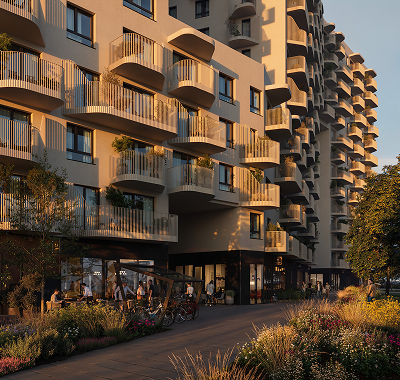
The demolition is the first visible step in the transformation of the site where the MILROSE project will gradually take shape. The new phase of this site did not begin with the construction, but with the approach taken toward the original building, the recycling of materials, and site preparation.
We have been documenting the entire demolition process via photos and videos on the MILROSE project’s social media channels. If you want to know more about selective demolition and how it’s carried out, be sure to read the article below on Aktuality.sk.
→ Read the article on Aktuality.sk